
Tree Safety Inspections & Reports
Expert Arborist Consulting & Risk Assessment
When safety or compliance is on the line, you need clear, professional documentation. Our consulting arborists provide ISA TRAQ–qualified tree risk assessments and formal reports accepted by cities, counties, and insurance providers across El Dorado County.
Foothill Forest Care helps homeowners, contractors, and agencies make defensible decisions that protect people, property, and the Sierra Foothills canopy.
What Is a Tree Risk Assessment?
A tree risk assessment is a professional evaluation of a tree’s health, structure, and potential to fail, especially in areas where failure could impact people, homes, or property. At Foothill Forest Care, our assessments are performed using the ISA Tree Risk Assessment Qualification (TRAQ) framework, an industry-standard method used by arborists nationwide.
During a tree risk assessment, we evaluate:
Tree condition, including visible defects, decay, cracks, and previous damage
Structural stability of the trunk, roots, and major limbs
Soil conditions, slope, drainage, and root plate stability
Targets such as homes, vehicles, walkways, and access routes
Likelihood of failure and potential consequences if failure occurs
You’ll receive a clear, written summary that includes photos, risk ratings, and prioritized recommendations. These may range from pruning and load reduction to monitoring, cabling or bracing, or removal when necessary. In cases where structural defects are severe, professional tree removal services may be recommended. Our goal is to clearly explain risk level, likelihood of failure, and practical next steps so you can make informed decisions with confidence.
Foothill Forest Care combines field experience with scientific standards to provide tree risk assessments that are thorough, easy to understand, and tailored to the unique conditions of the Sierra Foothills.

How do TRAQ-qualified arborists assess tree risk?
Tree risk is evaluated by considering the tree’s condition, structural defects, site factors, and nearby targets such as homes, walkways, or roads. TRAQ methodology assesses both the likelihood of failure and the severity of potential impact.
Does a tree risk assessment automatically mean a tree must be removed?
No. Many risks can be reduced through pruning, monitoring, or other mitigation measures. Removal is recommended only when risk cannot be reasonably managed.
Will the assessment include written documentation?
Yes. Tree risk assessments can include written findings, photographs, and clear recommendations prepared by a TRAQ-qualified arborist for homeowners, HOAs, insurers, or agencies.
What Is An Arborist Report & How Do They Help

What is an arborist report?
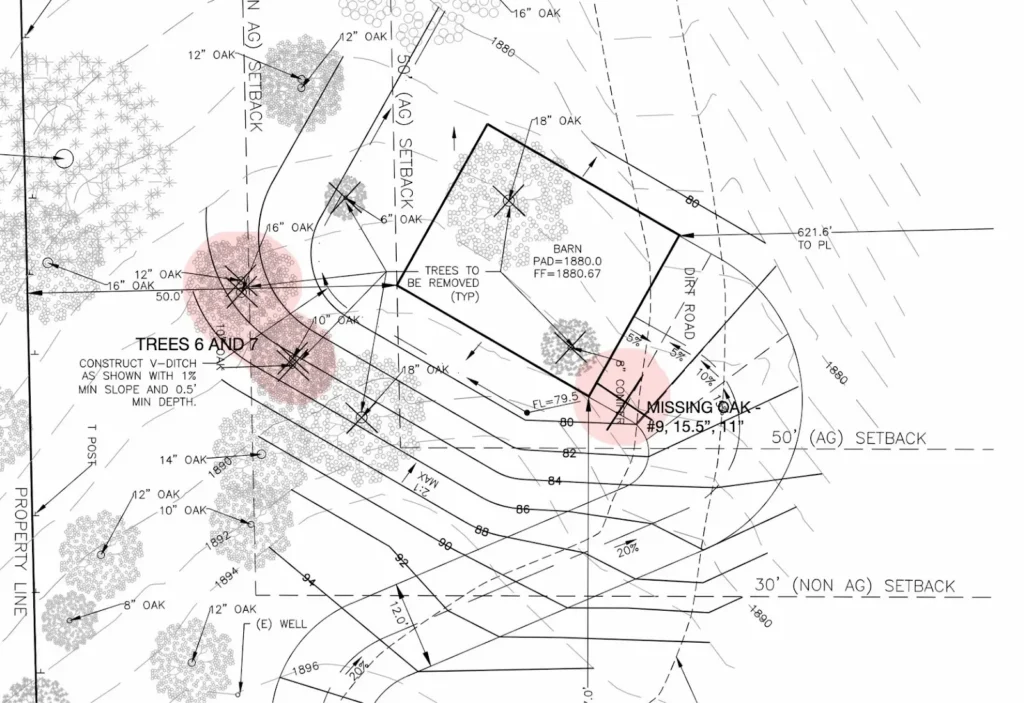
An arborist report is a professional document prepared by an ISA Certified, TRAQ-qualified arborist that describes tree species, size, condition, and risk, along with recommended actions. These reports are commonly required for permits, construction projects, and HOA approvals.
How Arborist Reports Help With Permits and Tree Compliance in El Dorado County
If you’re planning construction, grading, or tree removal, you may need an arborist report to meet local permit requirements and protect regulated trees. Foothill Forest Care provides permit-ready arborist reports for El Dorado County, including city and HOA review, so your project can move forward with fewer delays and revisions.
Our arborist reports are commonly used for:
Remodels, additions, driveways, and new construction
Oak tree removal permits and protected tree applications
Grading and site development near existing trees
City/county planning review and environmental compliance
HOA submittals and architectural review packages
What’s included in a permit-ready arborist report
Each report is tailored to your site and typically includes:
A tree inventory (species, size/DBH, condition, and location)
Photos and mapping to document existing tree resources
Impact analysis (how construction may affect tree health and stability)
Tree protection recommendations (TPZ, fencing, pruning, monitoring)
Mitigation guidance when removal or impacts are unavoidable
We document tree health and risk clearly, then provide practical recommendations for preservation, protection, or removal based on site conditions and project scope.
Designed for reviewers (so you don’t get stuck in “revise and resubmit”)
Our reports are formatted to align with common local review expectations and professional arboriculture standards. The goal is simple: give planners, reviewers, and HOAs the information they need to make a decision without unnecessary back-and-forth.
When is an arborist report required?
Reports are often required for tree removal permits, construction near protected trees, oak tree compliance, development review, or HOA decision-making.
Are your arborist reports accepted by cities, counties, and HOAs?
Yes. Our reports are routinely accepted because they follow professional arboriculture standards and use TRAQ-based risk assessment language that agencies and reviewers recognize.
Can an arborist report help prevent unnecessary tree removal?
Yes. A well-prepared arborist report documents tree condition, risk, and mitigation options, supporting preservation when appropriate – OR – substantiating removal when conditions warrant it.
Trusted by Homeowners & Agencies Alike
Foothill Forest Care is trusted by homeowners, builders, and public agencies throughout the Sierra Foothills. Our team includes experienced arborists who have authored professional reports for the City of Placerville and El Dorado County, helping guide tree-related decisions on both private and public projects.
Our experience includes preparing arborist reports for:
Residential homeowners planning construction, remodels, or tree removal
Builders and designers working through local permitting requirements
County and city agencies reviewing development and infrastructure projects
Projects across El Dorado, Sacramento, and Placer Counties
Oak tree preservation and mitigation under local ordinances
Over the years, we’ve built strong working relationships with local planners, city arborists, and reviewing agencies. This familiarity helps ensure our reports are thorough, clearly documented, and aligned with local standards, leading to smoother reviews and more consistent approvals.
At every step, our role is to provide clear, defensible information so you can make informed decisions about your trees with confidence.
How Tree Risk Assessments Connect to Other Tree Services
Tree risk assessments often lead to practical next steps that support long-term safety and property protection. Depending on findings, recommendations may include:
Structural pruning to reduce limb failure risk
Professional tree removal when risk cannot be mitigated
- Emergency storm damage cleanup when high-canopy limbs fail or trees are compromised after severe wind events
Wildfire defensible space planning for structure protection
Plant health treatments to address decline before structural failure occurs
Expert Arborist Consulting and Risk Assessment — FAQs
What is an arborist report?
An arborist report is a professional document prepared by a qualified arborist that documents a tree’s species, size, condition, and risk, along with recommendations for protection, pruning, monitoring, or removal. Arborist reports are commonly requested for permits, construction planning, and HOA approvals.
When is an arborist report required?
You may need an arborist report for tree removal permits, projects involving protected oaks, development review, grading near trees, or when an HOA needs documentation before approving work.
Are your arborist reports accepted by cities, counties, and HOAs?
Yes. We prepare reports using widely recognized professional standards and clear risk language that agencies and reviewers are accustomed to evaluating.
Can an arborist report help prevent unnecessary tree removal?
Yes. A strong arborist report can document tree condition and risk, outline protection options, and support preservation when appropriate — or clearly justify removal when conditions warrant it.
Who uses your tree safety inspections and reports?
We work with homeowners, HOAs, property managers, real estate professionals, insurers, attorneys, and public agencies that require clear, defensible arborist evaluations.
Do you explain findings in plain language?
Yes. While our assessments are grounded in TRAQ methodology, our reports are written in clear, plain language so non-technical readers can understand the findings and recommendations.
Can your reports be used for insurance or liability documentation?
Yes. Tree safety inspections performed by TRAQ-qualified arborists are often used to document due diligence and informed risk management decisions.
Why choose Foothill Forest Care for tree risk assessments and reports?
Our team combines local experience with ISA certification and TRAQ qualification, providing professional, safety-focused guidance that protects people, property, and long-term tree health.
What does an arborist consultant do?
An arborist consultant evaluates tree health, structure, and safety to help property owners make informed decisions. Our consulting services are led by ISA Certified Arborists who are also TRAQ-qualified (Tree Risk Assessment Qualified by the ISA), meaning risk evaluations follow nationally recognized standards rather than opinion or guesswork.
Are your tree safety inspections performed by certified and qualified arborists?
Yes. All tree safety inspections and reports are conducted by ISA Certified Arborists with TRAQ (Tree Risk Assessment Qualification). This ensures tree risk is assessed using consistent, professional methodology accepted by agencies, HOAs, and insurers.
When should I request a professional arborist inspection?
You should request an inspection if a tree is near a home or structure, shows signs of decline, has storm damage, is involved in a permit or dispute, or raises safety concerns. An ISA Certified Arborists provides objective, defensible findings in these situations.
Do you provide independent, non-biased evaluations?
Yes. Our consulting work is arborist-led and evidence-based. TRAQ training emphasizes risk evaluation and documentation – not selling work, so recommendations may include monitoring, mitigation, preservation, or removal depending on conditions.