
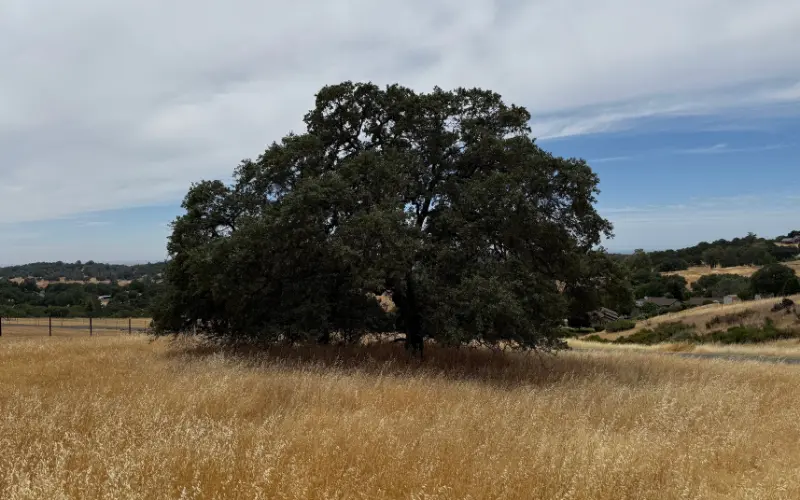
El Dorado County Oak Ordinance — What Every Property Owner Needs to Know
Updated for Ordinance No. 5235, adopted July 22, 2025. Written by ISA Certified Arborists at Foothill Forest Care.
If you own property in El Dorado County and there are oak trees on it, the county has rules about what you can and cannot do with them. Most homeowners don’t find out about these rules until they’re about to break them, sometimes at serious cost.
We’ve worked closely with the El Dorado County Planning Department for years. We know this ordinance inside and out. Here’s what you actually need to know.
Does the Oak Ordinance Apply to My Property?
The Oak Resources Conservation Ordinance applies to all privately owned land within the unincorporated area of El Dorado County at or below 4,000 feet elevation.
If your property is in Placerville, Shingle Springs, Cameron Park, El Dorado Hills, Pollock Pines, or any of the surrounding foothill communities, there is a very good chance the ordinance applies to you.
Quick Answer
The ordinance applies if your property is:
- Privately owned
- In the unincorporated area of El Dorado County
- At or below 4,000 feet elevation
When in doubt, call the Planning Division before doing any work near oak trees.
What Counts as an Oak Tree Under the Ordinance?
The ordinance protects native oak trees of the genus Quercus, including:
- Blue oak (Quercus douglasii)
- Valley oak (Quercus lobata)
- California black oak (Quercus kelloggii)
- Interior live oak (Quercus wislizeni)
- Canyon live oak (Quercus chrysolepis)
- Oregon oak (Quercus garryana)
- Oracle oak (Quercus x morehus)
Tree size matters significantly. Here is how the county classifies them:
Oak Tree Classifications
Diameter at Breast Height (DBH) is measured 4.5 feet above natural grade on the uphill side of the tree. For multiple-trunk trees, we add the diameter of the three largest trunks to calculate the combined DBH.
Exempt — Under 6″ DBH
Trees with a single trunk less than 6 inches in diameter are exempt from both permit and mitigation requirements.
Individual Native Oak — 6″ to 35″ DBH
Single trunk measuring 6 inches or more but less than 36 inches. Permit and possible mitigation required for removal.
Heritage Tree — 36″+ DBH
Single trunk 36 inches or greater, or multiple trunks with aggregate diameter of the three largest measuring 36 inches or more. Highest level of protection.
Valley Oak — Special Status
Individual valley oaks and valley oak woodlands receive special protection regardless of size. Separate mitigation calculations required.
Do I Need a Permit to Remove an Oak Tree?
It depends on the situation. Here is how to think through it:
Permit and Mitigation Required
If you want to remove a healthy oak tree as part of any development activity — building a pool, adding a structure, grading, landscaping changes, or any project requiring a building or grading permit — you will need an Administrative Permit and will likely owe mitigation fees or replanting.
Permit Required, Mitigation Exempt
Dead, dying, or diseased trees still require an Administrative Permit in most cases, but are exempt from mitigation fees. This is where we come in! An ISA Certified Arborist or other qualified professional must certify in writing that the tree meets this standard.
No Permit Required
Trees under 6 inches DBH, trees that fell due to a natural disaster, and approved defensible space activities are fully exempt from permit and mitigation requirements.
The Cost of Getting It Wrong
Removing oak trees without the proper permit carries serious consequences:
- Individual native oaks: fines up to 3 times the market value of replacement trees
- Heritage trees: fines up to 9 times the market value of replacement trees
- Oak woodlands: fines up to 3 times the in-lieu fee amount
- Development on that property may be denied or deferred for up to 5 years
What About Defensible Space and Wildfire Safety?
The July 2025 Update Changed This
The ordinance was significantly updated on July 22, 2025 (Ordinance No. 5235) with expanded exemptions specifically related to wildfire safety and insurance requirements. These are the most important changes for foothill homeowners:
- Approved defensible space activities are fully exempt from permit and mitigation, including removal of dead, dying, or diseased trees within your defensible space zone
- Insurance-required oak removal now has a clear process: submit an Administrative Permit application with either an assessment from a qualified professional or written documentation from your insurance company
- Emergency firefighting operations and post-fire remediation are fully exempt
- Healthy tree removal for defensible space still requires a permit — California law (PRC 4291) does not require removal of healthy trees for defensible space purposes
Can I Trim or Prune My Oak Trees?
Yes! Minor trimming is exempt from permit and mitigation requirements. The county defines minor trimming as:
- Cutting dead or diseased limbs or twigs
- Removing parts that could damage an existing dwelling
- Removing parts for safety or public utilities
- Pruning to promote the health or growth of the tree
Important: Trimming that substantially reduces the overall size, density, or natural shape of a tree is NOT considered minor trimming and is not exempt.
This is where working with a qualified arborist matters. An ISA Certified Arborist knows how to prune oaks in ways that improve their health and structural integrity without crossing into the territory that requires a permit.
Personal Use — Can I Remove Oaks for Firewood or Woodworking?
The county allows removal of up to 8 trees per year totaling no more than 140 combined inches of DBH for personal use such as firewood or woodworking. This is exempt from mitigation, but Heritage Trees and valley oaks are not exempt from mitigation even for personal use. A qualified professional must certify in writing that the trees being removed are not Heritage Trees or valley oaks. Note that if oaks are removed for personal use, no development will be permitted in that area for 2 years.
Why Work With a Certified Arborist for Oak Ordinance Compliance?
Many of the permit and mitigation exemptions under the ordinance require written certification from a qualified professional. That means an ISA Certified Arborist or other qualified professional must assess the tree and provide a written report before any removal can proceed.
At Foothill Forest Care, we have worked directly with the El Dorado County Planning Department on oak ordinance compliance for years. We understand how the county interprets the rules, what documentation they need, and how to navigate the process efficiently for homeowners and property developers alike.
Getting the arborist report right the first time saves significant time and money compared to going back and forth with the Planning Division.
What a Qualified Arborist Assessment Includes
- Tree identification and species confirmation
- DBH measurement using county-required methodology
- Health assessment — dead, dying, diseased, or healthy determination
- Written certification meeting Planning Division requirements
- Heritage Tree determination
- Documentation suitable for permit application submission
Frequently Asked Questions About the El Dorado County Oak Ordinance
Do I need a permit to remove a dead oak tree in El Dorado County?
In most cases yes! An Administrative Permit is required even for dead, dying, or diseased trees, unless the removal falls under an approved defensible space activity. However, dead, dying, and diseased trees are exempt from mitigation fees. A qualified professional must certify in writing that the tree meets this standard.
What happens if I remove an oak tree without a permit in El Dorado County?
The consequences are significant. Fines for unpermitted removal can reach 3 times the market value of replacement trees for individual native oaks, and 9 times the market value for Heritage Trees. The county may also deny or defer any development applications on that property for up to 5 years.
What is a Heritage Tree under the El Dorado County ordinance?
A Heritage Tree is any live native oak with a single trunk measuring 36 inches diameter at breast height or greater, or a multiple-trunk tree where the aggregate diameter of the three largest trunks measures 36 inches or more. Heritage Trees receive the highest level of protection under the ordinance.
Can my insurance company require me to remove oak trees in El Dorado County?
Yes, and the July 2025 ordinance update created a specific process for this. Submit an Administrative Permit application along with either an assessment from a qualified professional or written documentation from your insurance company requiring the removal. Contact the Planning Division at (530) 621-5355 for guidance on this process.
Does the oak ordinance apply to defensible space work?
Approved defensible space activities are exempt from permit and mitigation requirements. This includes removal of dead, dying, or diseased trees within your defensible space zone. However, removal of healthy trees is not required for defensible space under California law (PRC 4291) and is not exempt from the ordinance.
How is tree diameter measured for the El Dorado County oak ordinance?
Diameter at Breast Height (DBH) is measured 4.5 feet above natural grade on the uphill side of the tree. For multiple-trunk trees, the county adds the diameter of the three largest trunks to calculate the combined DBH. This measurement determines whether a tree is classified as exempt, an Individual Native Oak, or a Heritage Tree.
Can Foothill Forest Care help me with oak ordinance compliance?
Yes. Both of our co-founders are ISA Certified Arborists who have worked directly with the El Dorado County Planning Department. We can assess your trees, provide the written certification required for permit applications, and help you understand your options before any work begins. Contact us at (530) 993-0110 or info@foothillforestcare.com.
We Know This Ordinance — And We Can Help You Navigate It
The El Dorado County oak ordinance is more nuanced than most people realize, and it was updated significantly in July 2025. Getting the right assessment from a qualified arborist before you start any project that involves oak trees is the single best way to protect yourself from fines and delays.
Need an Oak Tree Assessment or Arborist Report?
We’re happy to walk your property with you, assess your trees, and tell you exactly what the ordinance requires for your situation. No guesswork, no surprises.
Call us: (530) 993-0110
Email us: info@foothillforestcare.com